The number of people who approach a lot purchase the way they’d approach a resale home is genuinely high. Almost all of them hit an expensive surprise within 90 days.
Buying land to build a house is not the same as buying a house. A resale home has a price you can appraise, inspect, and compare against others on the street. Raw land has a price, and then it has the reality underneath. That reality is what determines whether you actually build there, and what that build costs.
This is what I tell clients who come to TC Homes having found a lot they love.
What Does Buying Land to Build a House Actually Involve?
Buying land to build a house means purchasing a parcel with the specific intent to construct a primary residence, which requires verifying the land is legally buildable, confirming utilities can reach it, understanding what site preparation will cost before you close, and securing the right financing for your situation.
None of this is visible in the listing. A lot that looks clean may have a wetland buffer removing 40% of buildable area. A cheap lot may be cheap because the soil won’t support a conventional foundation. Due diligence is how you find out; it costs money and time, and most first-time land buyers underinvest in it.
Haven’t found your lot yet? Finding the right parcel is the step before everything else in this article. Read: How to Find Land to Build a House in the Twin Cities →
What Should You Look for When Evaluating a Lot?
When evaluating a lot for new construction, the listing price and acreage are starting points, not the story. There are several things to consider when buying land to build a house that don’t appear anywhere in the MLS listing: zoning classification, utility access, road frontage and legal access, topography and drainage, and setback requirements.
Zoning Classification
This is your first check. A lot can be zoned agricultural, conservation, or commercial in ways that prevent residential construction entirely. Even lots zoned residential may restrict structure size, height, setbacks, or architectural style. In the Twin Cities suburbs, municipal ordinances vary significantly from city to city.
Utility Access
The question isn’t whether utilities exist nearby. It’s what connecting to them will cost. A municipal sewer line 300 feet from the property is very different from one 1,000 feet away. Rural lots may need a private well and septic system entirely. In Minnesota, a septic system runs $15,000 to $40,000 depending on soil conditions. A well adds $8,000 to $25,000. Get these numbers before finalizing any offer.
Road Frontage and Legal Access
“Legal access” means an easement or direct frontage documented in the title, not a path that exists on a map. Landlocked parcels are nearly impossible to build on. Check the title documents directly.
Topography and Drainage
A steeply sloped lot can add $20,000 to $80,000 in site prep before a foundation is poured. Standing water signals either a high water table or inadequate drainage, both of which complicate foundation design and often require engineered solutions.
Setback Requirements
Front, rear, and side setbacks can consume more of a small lot than buyers expect, leaving insufficient room for the home they actually want.
Once you’ve found the right lot, your floor plan is the next decision. TC Homes’ collections range from 1,992 to 6,276 sq ft, all fully customizable around how your family actually lives. Browse TC Homes floor plans →
What Does Site Preparation Actually Cost?
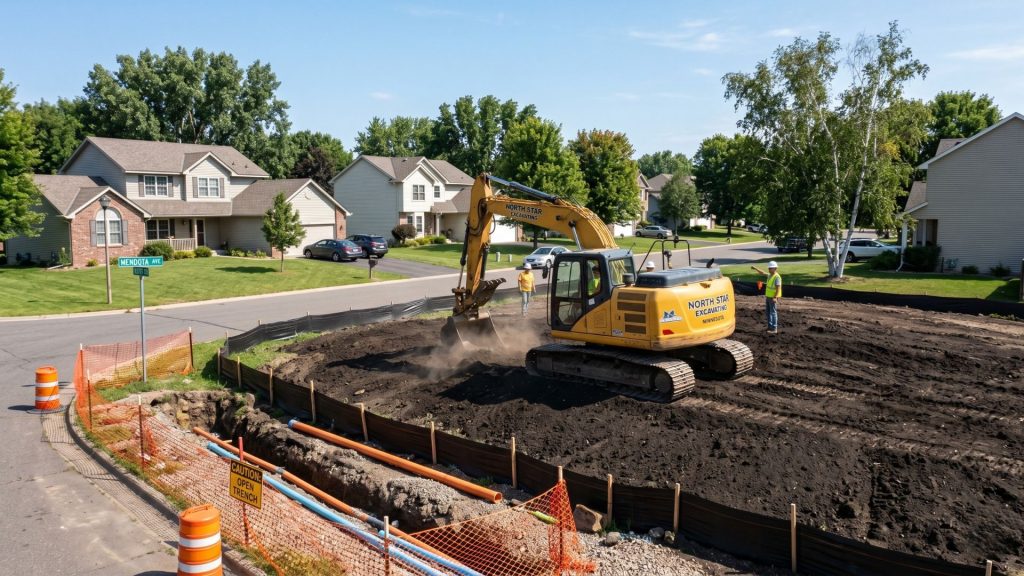
Site preparation on a raw lot typically runs $15,000 to $75,000 before any vertical construction begins, with complex lots going higher. This is the number that surprises people most. It’s not in the listing. You discover it when a builder walks the lot with you.
Site Preparation Cost Breakdown (Twin Cities Metro, 2026)
| Line Item | Low End | High End | Notes |
|---|---|---|---|
| Tree clearing and grubbing | $3,000 | $15,000 | Stump removal billed separately |
| Grading and earthwork | $5,000 | $60,000+ | Biggest variable; priced per cubic yard moved |
| Driveway | $3,500 | $30,000 | Distance from road and culvert requirements matter |
| Well installation | $8,000 | $25,000 | Required on lots without municipal water |
| Septic system | $15,000 | $40,000 | System type determined by perc test results |
| Utility trenching (electric, gas, cable) | $5 to $15/ft | varies | Multiplies quickly on deep lots |
| Land survey | $500 | $1,500 | Required before most permits |
| Soil and perc testing | $400 | $1,000 | Required for septic system design in MN |
| Total site prep range | $15,000 | $75,000+ | Before any vertical construction |
Two adjacent lots with identical prices and identical acreage can have a $50,000 difference in site preparation cost based on topography, soil, and utility distance. This is why walking a lot with a builder before making an offer matters.
What Is the Due Diligence Checklist for Buying Land?
Before closing on land to build a house, work through this buying land to build a house checklist. Each step has the potential to change your decision or your negotiating position.
Due Diligence Checklist: Land Purchase for New Construction
| Step | What It Covers | Typical Cost | Timeline |
|---|---|---|---|
| Land survey | Exact boundaries, easements, encroachments | $500 to $1,500 | 1 to 2 weeks |
| Soil test + perc test | Foundation suitability, septic system eligibility | $400 to $1,000 | 1 to 2 weeks |
| Phase I environmental assessment | Wetlands, floodplain, contamination, protected species | $1,000 to $3,500 | 2 to 3 weeks |
| Title search | Ownership, liens, deed restrictions | $200 to $500 | 1 to 2 weeks |
| Municipal pre-application meeting | Permit requirements, review timelines, known parcel issues | $0 to $200 | 1 week to schedule |
| Total due diligence | $2,100 to $6,700 | 30 to 60 days |
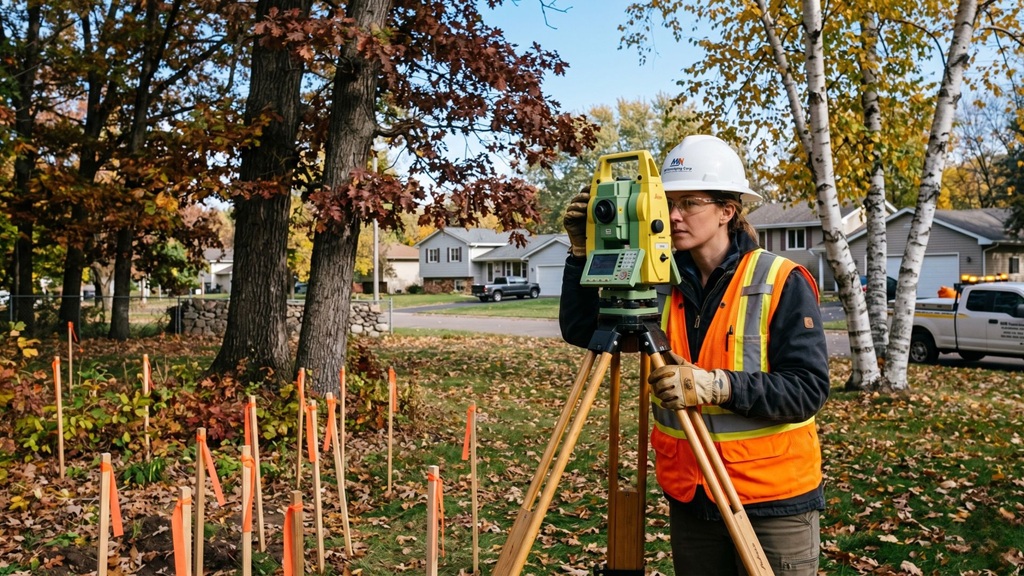
- Land survey. A current boundary survey defines exact lot lines, identifies easements (utility, drainage, or access easements running through the property), and flags any encroachments. The survey in the MLS listing may be outdated.
- Soil test and perc test. The soil test determines whether the ground can support a conventional foundation. In Minnesota, foundations go 42 to 48 inches below grade for frost depth, so soil stability at depth matters. The perc test is required for any lot using a septic system; it determines how quickly soil absorbs water and controls what septic design is permitted. A failed standard perc test may mean an engineered system or, in some cases, the lot may not be septic-suitable at all.
- Phase I environmental assessment. Checks for wetlands, floodplain designation, protected species habitat, and prior contamination. Minnesota’s wetland protection rules are among the strictest in the country. A wetland buffer zone can remove significant buildable area in ways invisible on a standard map. Floodplain designation, determined through FEMA’s Flood Map Service Center, permanently affects both what you can build and what you’ll pay for insurance.
- Title search. Confirms who owns the land, checks for liens (unpaid taxes, contractor liens, lender claims), and identifies deed restrictions that run with the property. Deed restrictions can prohibit certain structure types, require minimum square footage, or limit future subdivision.
- Municipal pre-application meeting. Before finalizing any purchase, schedule a meeting with the local building department. Bring preliminary plans. Ask what permits and reviews are required, what the current review timeline looks like, and whether there are known issues with the specific parcel. In the Twin Cities suburbs, permit review timelines vary meaningfully between municipalities, and knowing this before you close affects your project schedule.
Learn more about what to expect once your lot is secured and construction begins. Our guide covers how to evaluate builders, set a realistic budget, and stay on track from planning to final walkthrough. Read: 7 Tips for Building a Custom Home →
What Is the Difference Between a Land Loan and a Construction Loan?
Whether you need a land loan or a construction loan depends on your timeline. Buying land to build a house loan options come in two main structures, and choosing the wrong one costs money.
A land loan finances only the purchase of the land. A construction loan finances the land plus the cost of building your home, with funds disbursed in draws as construction progresses.
- Land loan: Typically requires 20-35% down, runs at higher interest rates than a conventional mortgage (undeveloped land is considered higher-risk collateral), and converts to a long-term note. Makes sense if you’re buying land now and building in 12-36 months.
- Construction-to-permanent loan: One loan covering land purchase, site preparation, and construction, converting automatically to a 30-year mortgage at completion. Typically requires 20% down based on the projected completed value of the home. This is the most common financing path for buyers ready to build immediately.
Construction loans disburse in stages tied to milestones, not in a lump sum. Your builder draws from the loan as work is completed and verified by the lender. TC Homes works with preferred lenders familiar with this process throughout the Twin Cities area.
How to Buy Land to Build a House: Step by Step

Knowing how to buy land to build a house starts with getting the sequence right. Most people don’t. They find a lot, fall in love with it, make an offer, and then call a builder. The better sequence runs the other direction.
Here are the steps to buying land to build a house that minimize surprises and keep your budget intact.
Step 1: Talk to a builder before you look at specific lots.
A builder who has built in your target area knows which municipalities have longer permit timelines, what grading conditions are typical, and what site characteristics to avoid before you spend anything on due diligence. This conversation changes how you evaluate every parcel you see after it.
Step 2: Define your lot criteria.
Based on your planned home size and style, identify the minimum lot size, zoning classification, and utility access you need. Know your geographic boundaries. In the Twin Cities, lot availability and price vary significantly between the northwest metro (where TC Homes builds) and the eastern or southern suburbs.
Step 3: Identify 3 to 5 candidate lots.
Use your criteria to shortlist parcels. At this stage, you’re filtering by location, price, and acreage, not committing to any specific property.
Step 4: Walk each lot with your builder before making any offer.
Walk-throughs cost nothing and reveal everything. Your builder can identify drainage issues, estimate grading complexity, flag utility distance problems, and give you a preliminary site prep range on the spot.
Step 5: Run a quick zoning and title check on your top choice.
A real estate attorney or title company can pull a preliminary title report in 24 to 48 hours. Confirm zoning classification with the municipality directly. This costs under $200 and eliminates the most obvious disqualifiers before you spend money on a full due diligence.
Step 6: Make an offer contingent on due diligence.
Structure your offer with a due diligence contingency clause that gives you 30 to 60 days to complete the full checklist. This protects your earnest money if you discover a disqualifying issue.
Step 7: Complete the full due diligence checklist.
Survey, soil and perc test, Phase I environmental assessment, title search, and municipal pre-application meeting. Budget $2,100 to $6,700 and 30 to 60 days.
Step 8: Use findings to finalize your construction budget.
Any surprises in due diligence become negotiating points or project cost adjustments. A failed perc test, a significant grading requirement, or a long utility run all change your all-in budget. Confirm financing with your lender based on updated numbers.
Step 9: Close on the land and start the design process.
Once you own the lot, the design and permitting phase begins. According to the U.S. Census Bureau’s 2024 Survey of Construction, the national average from permit issuance to completion is 9.1 months. In the Twin Cities, custom homes typically take 12 to 18 months total from the start of design through move-in.
Once your lot is secured, your timeline begins. Our guide to how long it takes to build a house breaks down every phase with real Twin Cities timeframes, from permit to final walkthrough. Read: How Long Does It Take to Build a House? →
Buying Land to Build a House FAQ
Can I buy any lot and build on it?
No. A lot must be zoned residential, have legal road access, meet minimum lot size requirements, and be physically suitable for construction. Many “residential land” listings require verification before they’re actually buildable under current municipal rules.
What is a perc test and why does it matter in Minnesota?
A perc test (percolation test) measures how quickly soil absorbs water. Any Minnesota lot using a private septic system requires a perc test before a septic permit can be issued. Results determine which system type is allowed. Slow-draining soils may require a costly engineered mound system rather than a conventional drain field, which can add $15,000 to $25,000 to your site preparation costs.
How long does buying land and building a house take?
From initial lot search to move-in, expect 18 to 24 months for a custom home. Due diligence takes 30 to 60 days. Design and permitting adds 3 to 6 months. Construction in the Twin Cities typically runs 12 to 14 months for a custom single-family home.
What happens if I find a problem during due diligence?
You use it to negotiate. A failed perc test, a wetland buffer, or a title issue all give you negotiating power. Depending on severity, you can request a price reduction, require the seller to resolve the issue before closing, or walk away with your earnest money intact if your offer was properly contingent on due diligence results.
Do I need a real estate agent who specializes in land?
Yes. An agent who primarily handles resale homes is not the same as one who specializes in land transactions. Land purchases involve different due diligence, different financing structures, and different evaluation criteria than residential resale.
Ready to Build on Your Lot?
If you’ve found land in the Twin Cities metro and you’re ready to take the next step, TC Homes builds custom and semi-custom homes across Maple Grove, Plymouth, Minnetonka, Chanhassen, Eden Prairie, Dayton, and surrounding communities. Brian Tutt has been building in this market for over 32 years and walks lots with clients before they make offers.
Want a real read on what your lot will cost to build on? TC Homes will walk the land with you, give you honest site prep estimates, and help you figure out whether the lot makes sense for the home you want to build. Contact TC Homes →