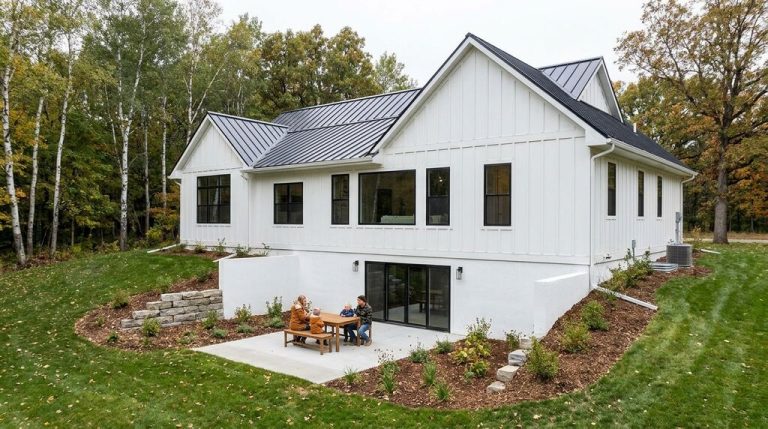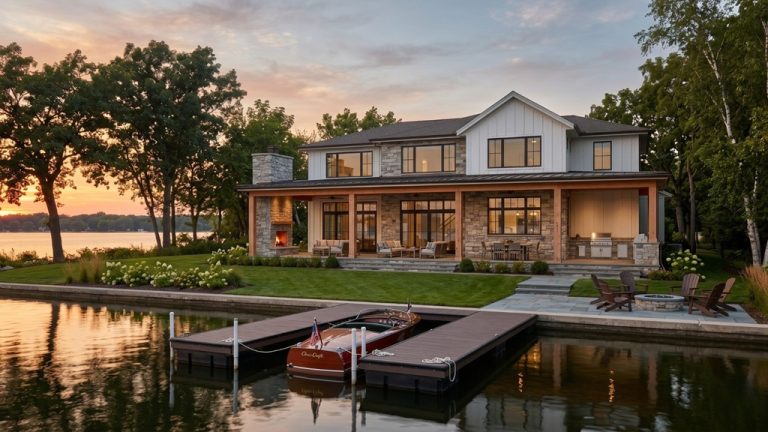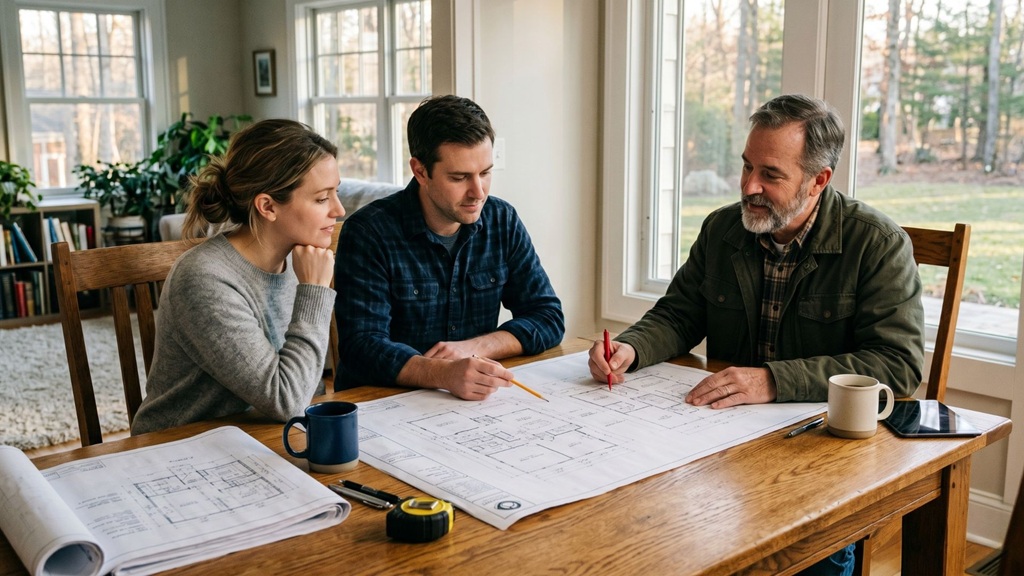
A spec home is built by a developer without a specific buyer in mind, then sold once it’s finished or near completion. A custom home is designed and built specifically for one family, on their land, to their exact requirements. That’s the core difference between a spec home vs custom home, and it drives nearly every other difference in cost, timeline, and experience.
Most homebuyers looking at new construction encounter both options. Knowing the tradeoffs before you start touring can save you months of confusion, and potentially tens of thousands of dollars in decisions you didn’t fully understand when you made them.
We’ve been building custom homes in the Twin Cities for over 30 years. Here’s what you actually need to know.
What Is a Spec Home?
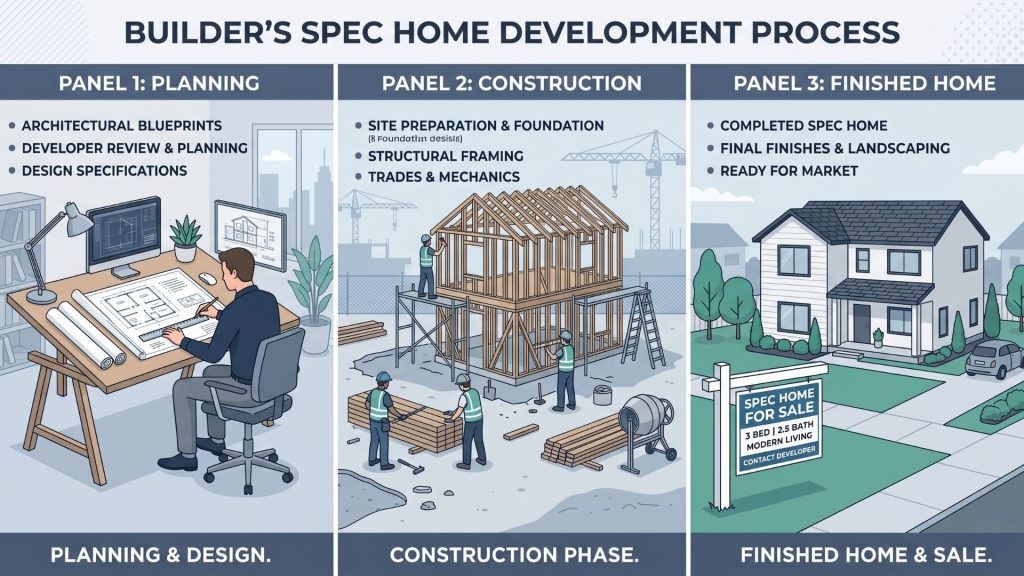
A spec home, short for speculative home, is a house a builder constructs without a committed buyer. The builder finances the project, makes every design decision, and lists the home for sale when it’s done. You’re buying a finished product someone else designed.
Spec homes can be purchased at various stages: fully complete, mid-construction with limited finish choices, or at foundation stage with slightly more flexibility. The structural layout is always fixed.
Speed is the main advantage. Spec homes can close in 30 to 60 days. The tradeoff is that every floor plan and finish was chosen to appeal to the widest possible buyer, not your family specifically.
According to the NAHB’s analysis of U.S. Census Bureau data, 73.1% of all new single-family homes started in 2025 were built-for-sale, the category spec homes fall into.
What Is a Custom Home?
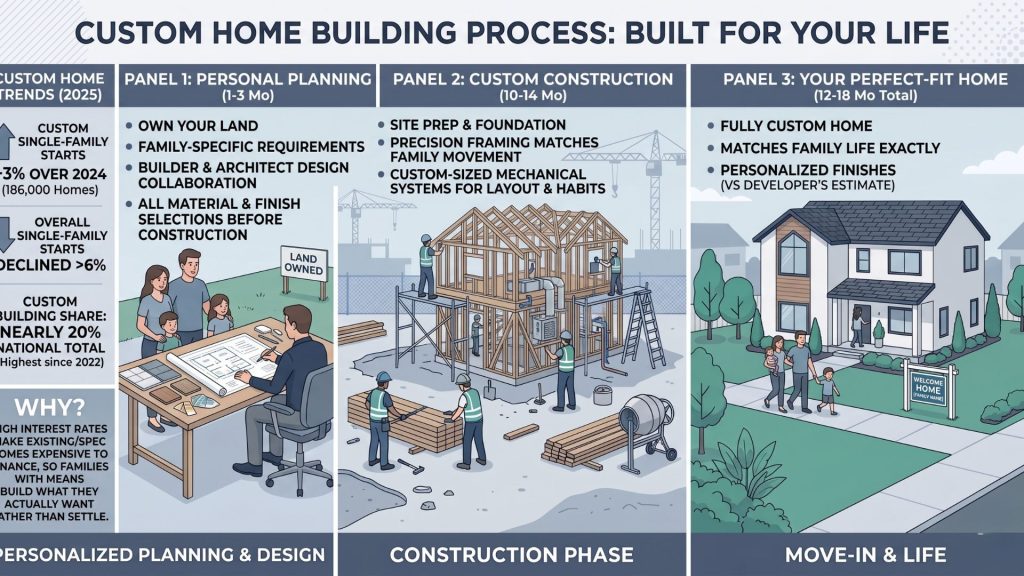
A custom home is built from scratch to a specific family’s requirements. You own or purchase the land, work with a builder and architect to design the floor plan, and make every material and finish selection before construction begins.
The design process typically takes 1 to 3 months. Construction in the Twin Cities runs 10 to 14 months. Total timeline from first conversation to move-in is usually 12 to 18 months for a fully custom home.
What you get in exchange for that time is a home that fits your life exactly. The floor plan matches how you actually move through your day. The finishes reflect your preferences, not a developer’s estimate of what will sell. The mechanical systems are sized for your home’s specific layout and your family’s habits.
Custom home building grew in 2025 despite a broader slowdown in the housing market. According to the NAHB, custom single-family starts totaled 186,000 homes in 2025, a 3% increase over 2024, while overall single-family starts declined more than 6%. Custom building now accounts for nearly 20% of all single-family starts nationally, the highest share since 2022.
The reason isn’t surprising. When interest rates make spec homes and existing homes expensive to finance, families who have the means tend to build what they actually want rather than settle.
Ready to understand what the custom process looks like from day one? See how TC Homes approaches every build differently.
Spec Home vs Custom Home: Side-by-Side Comparison
The table below covers decision points the Google AI overview leaves out, specifically the financing structure, who makes design decisions at each stage, and what happens when something goes wrong during construction.
| Factor | Spec Home | Custom Home |
|---|---|---|
| Who owns the land during construction | Builder | Homeowner |
| Financing during construction | Builder’s commercial loan | Owner’s construction-to-permanent loan |
| Floor plan flexibility | Fixed at permit stage | Fully customizable before permits |
| Finish selections | Pre-chosen by builder | Owner selects every material and finish |
| Changes mid-build | Usually not possible | Possible before framing; costly after |
| Who manages subcontractors | Builder | Builder, on your behalf |
| Builder warranty | Standard new construction warranty | Standard + builder relationship ongoing |
| HOA and community rules | Often in planned community with HOA | Depends on your lot selection |
| Lot choice | Limited to builder’s inventory | Any available parcel in TC Homes service area |
| Resale differentiation | Similar to other spec homes in area | One-of-a-kind; easier to stand out at resale |
The Cost Difference: What the Numbers Say
Custom homes cost more per square foot than spec homes, but the gap is smaller than most people expect. And the comparison changes significantly when you factor in what you’re actually getting.
According to the NAHB’s analysis of Census Bureau Survey of Construction data, the median price per square foot for custom contractor-built homes was $166 in 2024. Spec homes (built-for-sale) run lower on a national basis because builders standardize materials and buy in bulk across many projects. But in the Twin Cities market, where spec inventory is limited and land costs are high, that price gap often narrows.
Here’s how costs break down for the Twin Cities market in 2026:
| Cost Factor | Spec Home (Twin Cities) | Custom Home (TC Homes) |
|---|---|---|
| Base price per sq ft | $175 to $250+ | $250 to $400+ |
| Land included? | Yes, in purchase price | No, purchased separately ($70K to $300K+) |
| Design fees | None (pre-designed) | $0 with TC Homes (included in build) |
| Upgrade costs | 10% to 20% above base common | Priced in during design; no surprise upgrades |
| Typical 2,500 sq ft total | $437,500 to $625,000 | $625,000 to $1M (excl. land) |
| Financing type | Standard mortgage at closing | Construction loan converts to mortgage |
| Cost overrun risk | Low (fixed contract) | Managed with detailed pre-construction budget |
The most common mistake buyers make when comparing these two options is looking only at the purchase price. A $550,000 spec home that needs a home office addition, a layout reconfiguration, or a second garage stall within three years is not actually cheaper than a custom home that had those features built in from the start.
Wondering whether building or buying makes more financial sense for your family? Our full breakdown at building vs. buying a home covers 10-year cost of ownership comparisons for the Twin Cities.
How Financing Works for Each Option
Spec home and custom home financing work very differently. With a spec home, you use a standard mortgage at closing. The price is set, the home exists, and the process looks like any other purchase.
With a custom home, you start with a construction loan that covers the cost of building, drawn down in stages as work progresses. When construction is complete, the loan converts to a permanent mortgage, sometimes called a construction-to-permanent or “one-time close” loan. This requires more documentation up front and typically a 20% or higher down payment. The advantage is that your permanent rate is locked before you build.
Want to know what to expect at every stage, from first conversation to final walkthrough? See how we guide families through this stage.
Choosing a Lot and Building Where You Want
With a spec home, you’re limited to what the builder already owns, usually a specific development or subdivision. With a custom home, you can build on any parcel in TC Homes’ service area that meets zoning and utility requirements. You choose the neighborhood, the street, the orientation, and the school district.
Browse TC Homes’ service areas to see where we build across the Twin Cities metro. Lot availability, permit timelines, and community character vary by city, and we help families evaluate options before committing.
Start with the Floor Plan
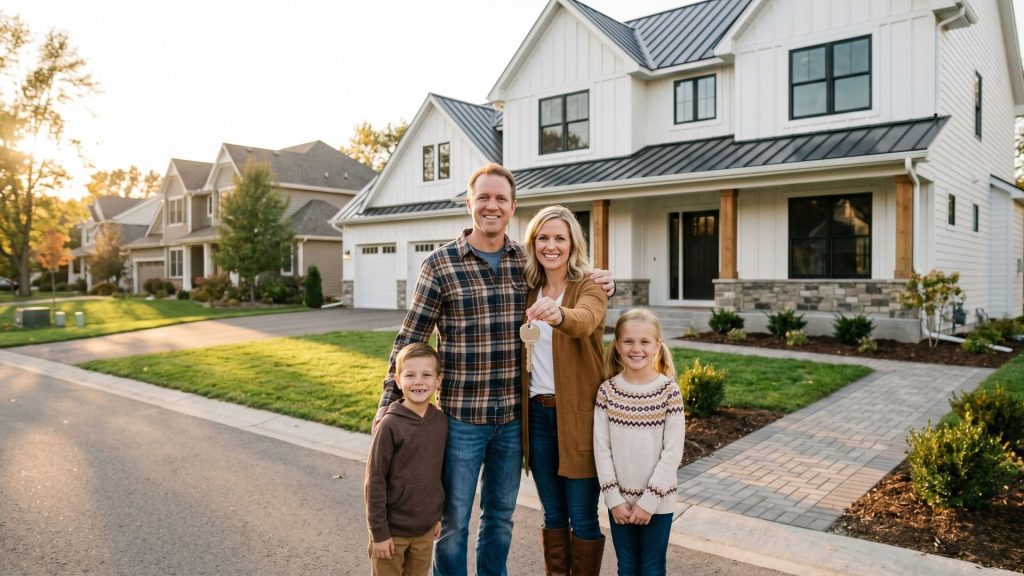
One of the most useful first steps for any family considering a custom home is to explore floor plan options before committing to anything. It helps clarify what’s possible within a given budget and often reveals priorities you hadn’t fully articulated yet.
Browse TC Homes’ floor plans and use the “Price Your Home” button to get a realistic starting estimate for the design you’re drawn to. It’s one of the fastest ways to ground your research in real numbers rather than general ranges.
Frequently Asked Questions
Are spec homes lower quality than custom homes?
Not always. A well-built spec home from a reputable developer can be high quality. The difference is that you have no input on the materials, systems, or layout. A custom home built to your specifications can be built to higher quality standards than a typical spec home because you’re making the decisions rather than accepting defaults chosen for cost efficiency.
How much more does a custom home cost than a spec home?
In the Twin Cities in 2026, spec homes typically run $175 to $250 per square foot including land. Custom homes run $250 to $400 per square foot for construction, plus land purchased separately. The upfront cost is higher, but custom homes avoid the upgrade costs and renovation expenses that buyers of spec homes frequently encounter in the first few years.
Can I negotiate the price of a spec home?
Sometimes, especially if the home has been sitting on the market. Builders carrying finished inventory have holding costs and may offer upgrades or price reductions to move the property. That said, the floor plan and most finishes are fixed regardless of what you negotiate on price.
Do custom homes take longer to build?
Yes. A spec home can close in 30 to 60 days if it’s finished. A custom home in the Twin Cities takes 12 to 18 months from first consultation to move-in. The extra time is spent on design, permitting, and construction tailored specifically to your family. For most people building custom, that timeline is worth it.
Ready to Build in the Twin Cities?
If you’ve decided a custom home is the right path for your family, the next step is a conversation about what you want to build, where you want to build it, and what it realistically costs.
Contact TC Homes for a free consultation and we’ll walk you through our process, your lot options, and a realistic budget for your goals.